what values for colors in a rgb command range what to what

The Color Range Control – Photoshop Selections
In this tutorial in our series on Photoshop Selections, we'll learn all about the Color Range control and why it's such a great tool for selecting areas in an image based on tone or colour.
The Color Range control is similar to the Magic Wand Tool in that both are used to select areas based on tonal and colour values, but that's really where the similarities cease. The Magic Wand was first introduced way back in the very outset version of Photoshop, and while it can still testify useful at times, it didn't accept long for the folks at Adobe to realize they could have done meliorate.
In Photoshop three, they introduced the Color Range control as a replacement of sorts for the Magic Wand. Yet for all its advanced features and flexibility, not to mention its vastly improved results, the Color Range command became nothing more than one of Photoshop'due south best kept secrets while the Magic Wand remained the tool of choice for most users.
In this tutorial, we'll learn why the Color Range command, not the Magic Wand, is the tool yous should be using when making tone and color-based selections.
Where To Notice The Color Range Command
The first deviation betwixt Colour Range and the Magic Wand is that Color Range isn't actually a selection tool at all, which is why you won't detect it mixed in with the Magic Wand and the other tools in the Tools panel. Color Range is a selection command, and nosotros access it from the aforementioned place we access other commands - the Menu Bar along the pinnacle of the screen. Go up to the Select carte du jour in the Menu Bar and choose Color Range:
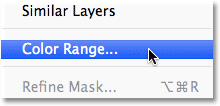
Go to Select > Color Range.
This opens the Color Range dialog box. If you've been using the Magic Wand for a while and are just now seeing Color Range for the offset time, you lot may be thinking "Geez, no wonder near people still utilize the Magic Wand! What the heck am I looking at here?". At kickoff glance, the Color Range command can seem a little intimidating. After all, with the Magic Wand, all we practise is select the tool from the Tools panel and click on the image. Simply don't let first impressions fool y'all. Colour Range is very like shooting fish in a barrel to use once you know how it works (which, of course, yous will after reading this tutorial!):
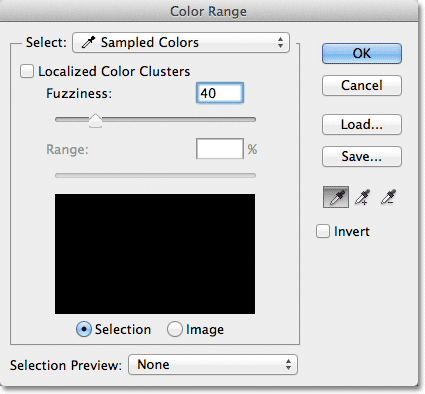
The Colour Range dialog box.
The Select Option
Permit'due south accept a quick run through of some of the things we're seeing in the Color Range dialog box. Nosotros'll look at the most of import options for now and save the others for a bit later. At the very top of the dialog box is the Select pick. By default, it's set to Sampled Colors:
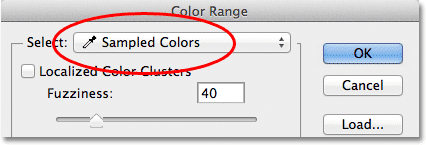
The Select option set to Sampled Colors.
The Select option controls what it is we'll be selecting in the image. With the option set to Sampled Colors, the Colour Range command behaves much like the Magic Wand. We can select pixels that share the aforementioned or like color just by clicking on an area of that color in the image. Photoshop "samples" the color we clicked on and selects all of the pixels that are the same as, or inside a certain range of, that color (hence the name "Color Range").
In most cases, you lot'll want to leave the Select pick gear up to Sampled Colors, just dissimilar the Magic Wand, the Colour Range control gives united states additional ways that nosotros can select pixels. If you click on the words "Sampled Colors", you'll pop open up a list of the different selection options nosotros can cull from. For example, nosotros can instantly select all the pixels of a specific color (reds, yellows, blues, etc.) just past choosing that colour from the list. Or, we can speedily select the brightest pixels in the image by choosing Highlights, or the darkest pixels by choosing Shadows. These boosted options can come in handy in sure situations, but as I mentioned, for the most office you'll want to get out the option set to Sampled Colors, which is what we'll be focusing on in this tutorial:
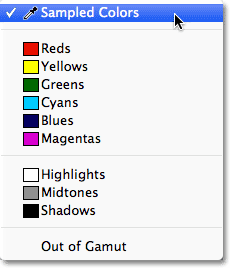
Colour Range gives the states more ways to select pixels than what we get with the Magic Wand.
The Eyedropper Tools
When using the Magic Wand to select areas of like color in an epitome, we click on the image with the Magic Wand itself. With Color Range, nosotros click on the paradigm with an eyedropper tool. In fact, Color Range gives us 3 eyedropper tools - one to make the initial choice, one to add together to the selection, and ane to subtract from the selection - and they're constitute on the right side of the dialog box.
From left to right, we take the chief Eyedropper Tool, used for making our initial color option (merely click on the image with the Eyedropper Tool to select the color y'all need), the Add to Sample Tool for calculation additional colors to the selection, and the Subtract from Sample Tool to remove colors from the selection. We can switch between the tools by clicking on their icons, but at that place's actually no need to do that. The chief Eyedropper Tool is selected for the states past default, and we tin temporarily switch to the other tools straight from the keyboard. To switch to the Add to Sample Tool, just hold downwardly your Shift key, so click on the prototype to add new areas to the choice. To access the Decrease from Sample Tool from the keyboard, concur down your Alt (Win) / Option (Mac) cardinal, then click on the paradigm to remove an area from the selection. In other words, now that yous know these three icons are hither, you lot tin safely forget all about them:
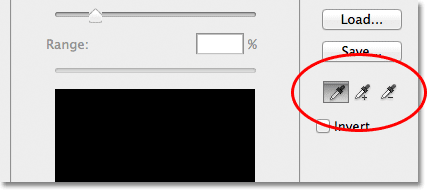
The Eyedropper (left), Add to Sample (middle) and Subtract from Sample (correct) tools.
The Selection Preview Window
In the bottom one-half of the dialog box is the selection preview window where we tin can see a live preview of which area(due south) of the image we've selected afterward clicking with the eyedroppers. The preview window displays our selection equally a grayscale epitome. If yous're familiar with how layer masks work, the preview window works exactly the same way. Areas in the epitome that are fully selected will appear white in the preview window, while areas that are not selected will appear black. In my case here, nothing is selected at the moment so my preview window is currently filled with solid blackness. As nosotros'll encounter, the Color Range command is likewise capable of partially selecting pixels, which is why it gives us better, more natural results than the Magic Wand. Partially selected areas announced as shades of gray in the preview window. Again, we'll run across how this works in a moment:
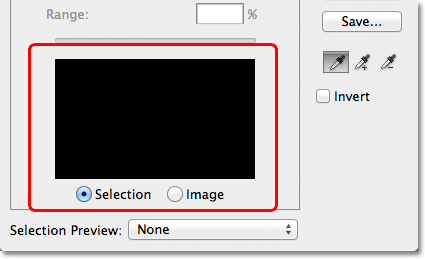
The selection preview window.
Fuzziness
Once nosotros've clicked on a color in the prototype, Photoshop goes ahead and selects all of the pixels in the image that are the same colour, also as the pixels that are similar to that color, either lighter or darker. But exactly how much lighter or darker can other pixels be for them to exist included in the selection? We need a fashion to tell Photoshop what the acceptable range is so that all of the pixels that fall within this range will be included in the choice, while the pixels that fall outside this range, either because they're too much lighter or as well much darker than the colour nosotros clicked on, volition not exist selected.
Both the Magic Wand and the Colour Range command give us means to tell Photoshop what the adequate range should be. With the Magic Wand, we apply the Tolerance pick in the Options Bar. The higher we prepare the Tolerance value, the wider the adequate range becomes. For example, if we leave the Tolerance value set to its default of 32 and so click on a colour in the paradigm, Photoshop will select all of the pixels that are the same color equally the pixel we clicked on, plus all of the pixels that are inside 32 brightness levels lighter and 32 brightness levels darker. Increasing the Tolerance value to 100 means nosotros'll select every pixels that's within 100 brightness levels lighter or darker than the color nosotros clicked on, while setting the Tolerance value to 0 ways we'll select only the pixels that are the exact same color, nix more than:

With the Magic Wand selected, the Tolerance choice in the Options Bar sets the acceptable color range.
The Color Range dialog box gives the states a similar way to set the adequate range, except here it'south not called Tolerance, it's chosen Fuzziness, and it has a major advantage over the Magic Wand's Tolerance option. Nosotros use the Fuzziness value the same manner we use Tolerance. The higher nosotros gear up the Fuzziness value, the more brightness levels we include in the acceptable range. A Fuzziness value of 40, for example, will select all pixels that are the verbal same color every bit the pixel nosotros clicked on, plus all pixels that are inside forty brightness values lighter or darker. Any pixels that are 41 or more effulgence levels lighter or darker will be excluded from the pick.
The Tolerance option, though, is very much a "hit or miss" type of thing. If nosotros click on the image with the Magic Wand and realize we didn't get the selection we needed because we used the wrong Tolerance value, all we tin can do is enter a different value, then click on the image and try once again. This "trial and error" approach to selecting pixels can go frustrating very quickly. This is where the Colour Range control really shines over the Magic Wand. Unlike the Tolerance value which forces us to judge at the correct value earlier we click on the image, the Fuzziness value tin easily be adjusted after we've clicked! All we need to do is click one time on the image to make the initial selection, and then we can suit the option simply by dragging the Fuzziness slider left or right to increase or decrease the range. A live preview of our selection will announced in the preview window as nosotros elevate the slider so there'south no guesswork needed at all. We'll see an example of how Fuzziness works in a moment:
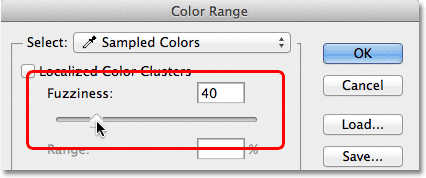
The Fuzziness option is the Color Range version of the Magic Wand's Tolerance selection.
Now that we've covered the basics of the Colour Range dialog box, let's see it in action. Here'southward a document I have open in Photoshop fabricated up of a simple dark-to-calorie-free blue gradient, with a yellow bar running through the eye:
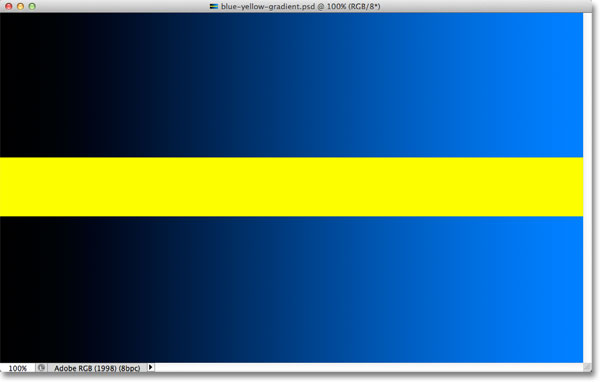
A blue gradient divided horizontal by a yellow bar, but you lot knew that already.
Let'southward say I desire to select part of the blue slope using the Color Range control. First, I'll become upward to the Select menu at the top of the screen and choose Colour Range. Then, when the Color Range dialog box appears, I'll brand sure my main Eyedropper Tool is selected (which, every bit we learned, should already be selected past default):
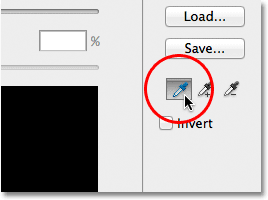
Making sure the primary Eyedropper Tool is active.
With the main Eyedropper Tool active, I'll click somewhere in the eye of the slope to sample a shade of blueish:
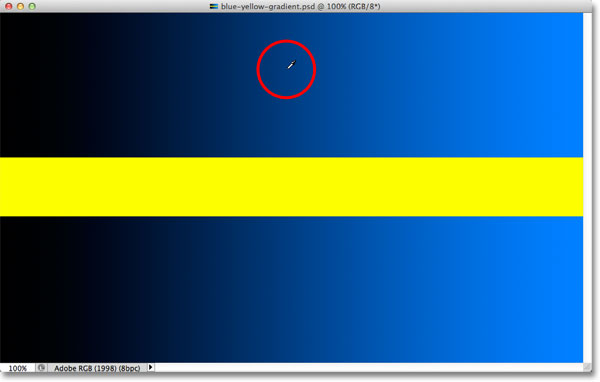
Clicking in the centre of the gradient with the Eyedropper Tool.
If nosotros await at the selection preview window in the dialog box, we see that I've now selected office of the image based on the shade of blue I clicked on. The white expanse represents the pixels that are selected, while the black areas are not role of the option:
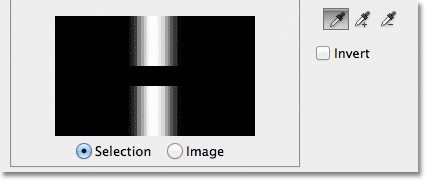
My initial selection in the preview window.
If I click on a different function of the gradient, I'll become a different result. I'll click on a darker shade of blue this time:
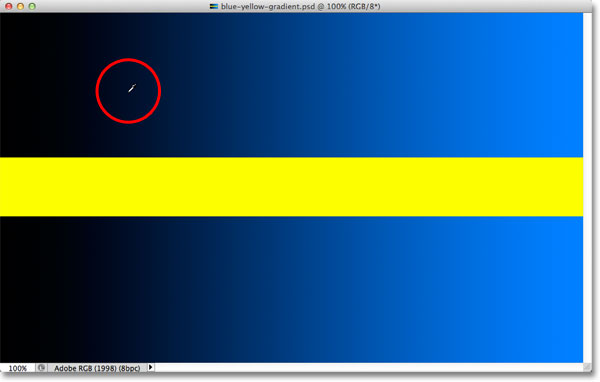
Clicking with the Eyedropper Tool on a darker shade of blue.
The preview window now shows me that I've selected a different role of the image:
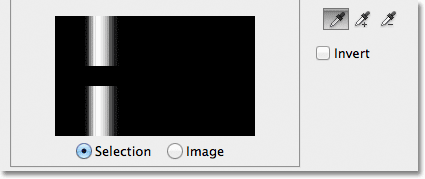
Clicking on a darker shade of blue resulted in a dissimilar selection.
And if I click on a lighter shade of blue in the slope:
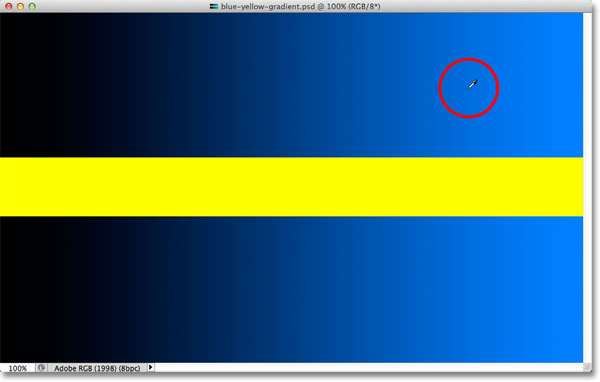
Clicking on a lighter shade of blue.
The preview window updates to show me that I've now selected a lighter part of the image:
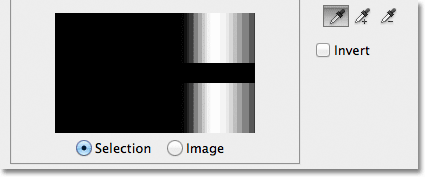
Lighter shades of blue are now selected. Darker shades are not selected.
Notice that no affair where I clicked on the blue gradient, Photoshop completely ignored the xanthous bar in the centre. If I click on the yellow bar:
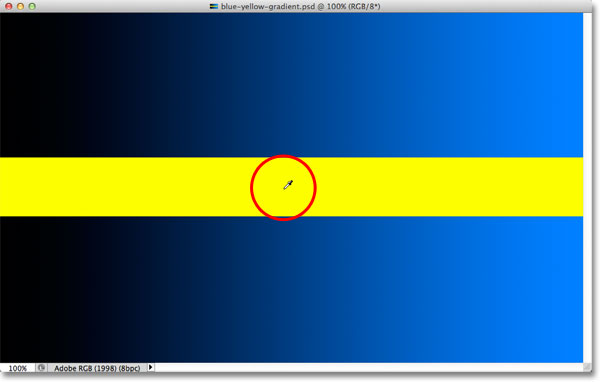
Clicking on the yellow bar.
The preview now shows me that the xanthous bar is selected, while the bluish gradient above and below it is existence ignored:
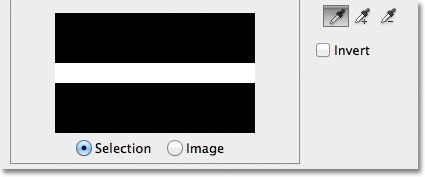
The yellow bar is now selected. The blueish slope is not.
I'm going to click again in the middle of the blue gradient and then we can take a closer expect at the Fuzziness option and how it lets us accommodate our selection on the fly:
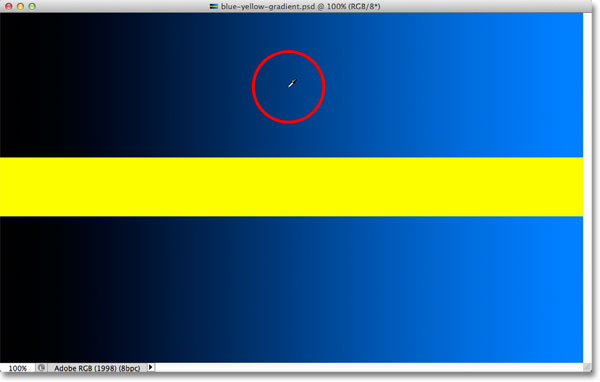
Clicking again in the middle of the gradient.
Nosotros see in the preview window that I've again selected an area in the middle:
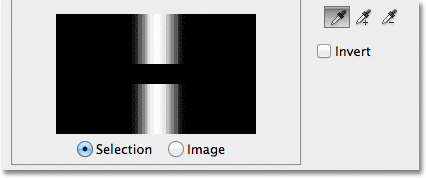
Back to the original selection.
When I clicked on the middle of the slope, my Fuzziness value was set to 40, which means Photoshop selected the exact shade of blueish I clicked on, plus xl shades lighter or darker. But what if my Fuzziness value wasn't high enough and I needed to select a greater range of colors? Not a trouble! All I demand to do is drag the Fuzziness slider towards the right to increase the range. As I elevate the slider, the preview window updates to show me my new option. I'll increase my Fuzziness value to 100, which means I'm now selecting all pixels that are inside 100 brightness levels lighter or darker than the shade of blue I initially clicked on. I can see in the preview window that I've at present selected a much larger section of the gradient. As well, I could take dragged the slider towards the left to lower the Fuzziness value, in which instance less of the gradient would be selected:
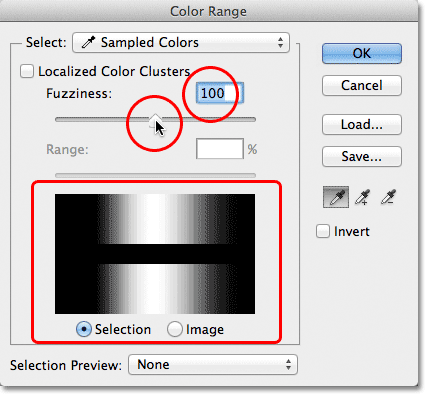
Increasing the Fuzziness value with the slider increases the selected area in the preview window.
Discover that the display in the preview window isn't limited to just pure white and pure black. Instead, it transitions smoothly and gradually from white to gray to black. That's considering the Color Range command is capable of partially selecting pixels. Whatsoever pixels that are not the exact color we clicked on but still fall within the acceptable brightness range (set up past the Fuzziness value) will be partially selected. These are the grey areas in the preview window. The closer an area is to the color nosotros clicked on, the more selected information technology will exist, represented by lighter shades of grayness. Darker shades of gray represent areas that are further away from the colour we clicked on and are less selected. This power to "partially select" pixels can sound a niggling strange, but information technology's why the Color Range command gives u.s.a. much smoother, more natural selections than what we could ever get from the Magic Wand.
Shortcodes, Deportment and Filters Plugin: Error in shortcode [ads-basics-heart]
Calculation To The Selection
Besides irresolute the Fuzziness value, we can also use the Add to Sample Tool to add areas to our initial selection. As nosotros've already learned, though, there's no need to waste material time selecting the eyedropper tools from the dialog box. All we demand to do to temporarily switch from the main Eyedropper Tool to the Add to Sample Tool is to printing and hold the Shift key. With the Shift key held down, a small plus sign ( + ) will appear in the bottom correct corner of the eyedropper cursor, letting you know that you lot've switched tools. Releasing the Shift fundamental will switch you dorsum to the master Eyedropper Tool (the plus sign volition disappear).
I'm going to set my Fuzziness value back to 40, just to make things easier to see:
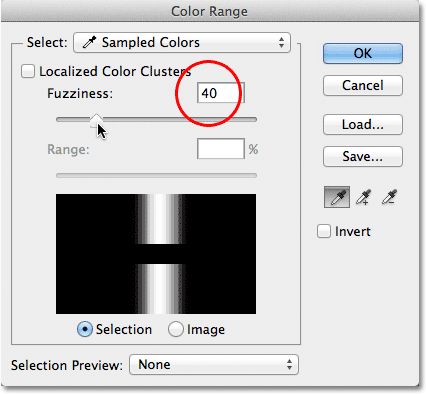
Setting Fuzziness dorsum to xl.
To add more of the gradient to my initial option, I'll hold downward my Shift central, which switches me to the Add to Sample Tool, and I'll merely click on the area I want to add. I'll choose a brighter shade of blueish:
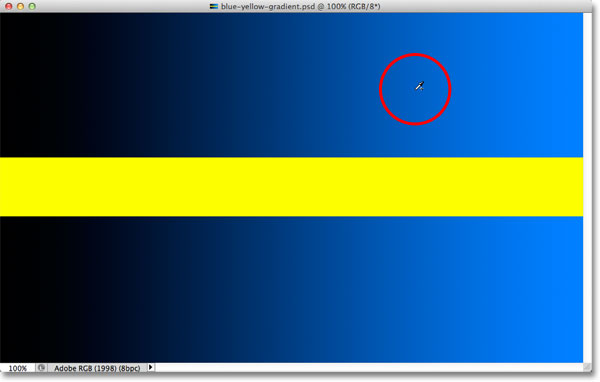
Clicking on the prototype with the Add to Sample Tool (property downward the Shift key).
If nosotros wait at the preview window, nosotros see that lighter shades of blueish take been added to my selection:
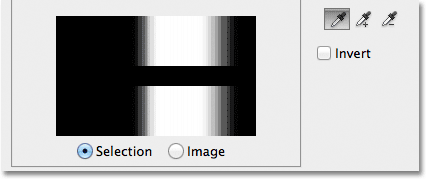
More of the slope has been selected.
Yous tin also drag across an surface area of the prototype with the Add together to Sample Tool to add an entire range of colors or brightness values to the selection at one time. Again, I'll concord down my Shift primal to access the Add to Sample Tool, and so I'll click and elevate across a large area of the gradient:
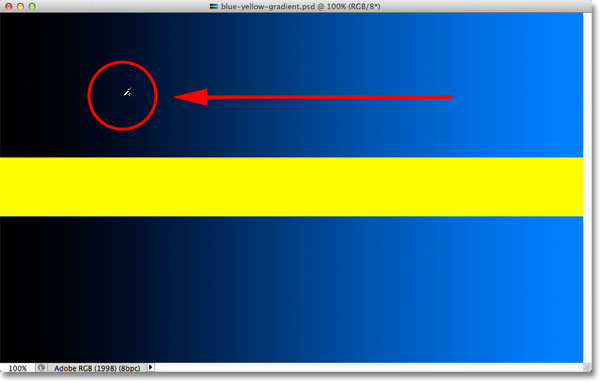
Dragging with the Add to Sample Tool.
And at present nosotros see in the preview window that I've added fifty-fifty more than of the gradient to my option:
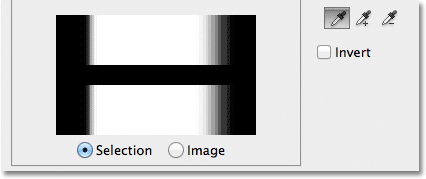
The result subsequently dragging with the Add to Sample Tool.
Subtracting From The Pick
We can also subtract areas from the pick using the Subtract from Sample Tool. Once again, there'south no demand to take hold of information technology from the dialog box. Simply hold downward your Alt (Win) / Choice (Mac) key on your keyboard to temporarily switch to the Decrease from Sample Tool. A small minus sign ( - ) will appear in the bottom right corner of your eyedropper icon. Click on the area you want to remove from the choice, then release the Alt (Win) / Choice (Mac) key to switch back to the main Eyedropper Tool when you lot're done.
I'll click on a darker expanse of the gradient with the Subtract from Sample Tool:
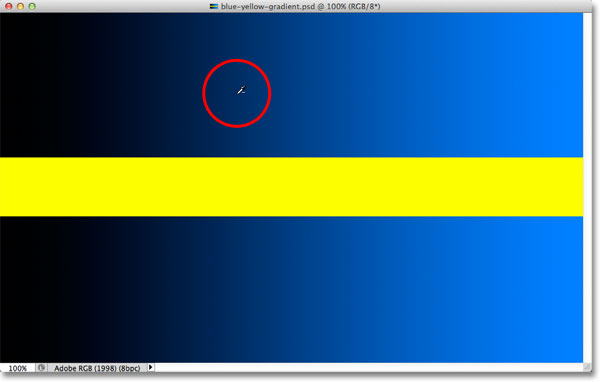
Clicking with the Subtract from Sample Tool.
The preview window at present shows that I've removed those darker shades of bluish from the selection:
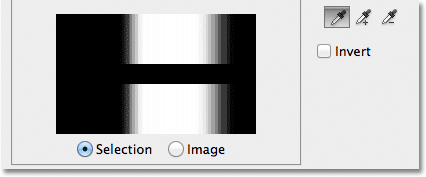
The consequence later on clicking with the Decrease from Sample Tool.
One problem, though, with the Subtract from Sample Tool is that it doesn't work as well as the Add to Sample Tool, and it's not e'er like shooting fish in a barrel to predict what results yous'll go from it. If you make a mistake with the Add to Sample Tool and add the wrong area to your pick, it's oft easier but to undo your terminal footstep and endeavor again. The Color Range control gives us a single Undo level, so if you make a mistake with the Add to Sample Tool, printing Ctrl+Z (Win) / Command+Z (Mac) on your keyboard to undo it, then try again.
When you're happy with your option preview, click OK in the top right corner of the Color Range dialog box to close out of information technology:
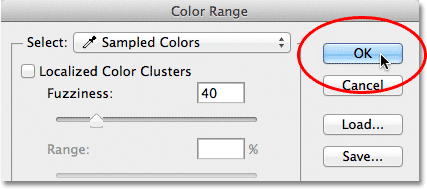
Clicking OK to shut out of the dialog box.
Photoshop and then displays your pick in the certificate every bit a standard "marching ants" selection outline. Keep in mind, though, that in most cases, the Color Range control volition have partially selected sure pixels, and that Photoshop can only display the option outline around pixels that are at to the lowest degree 50% selected. Any pixels that are less than 50% selected will fall outside the selection outline, which means that the outline may not be a completely accurate representation of your selection. This isn't a huge trouble, simply something to remember:
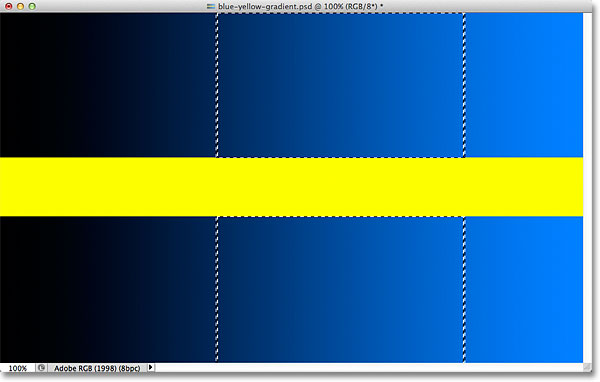
The standard "marching ants" outline is now displayed effectually the selected part of the gradient.
Shortcodes, Actions and Filters Plugin: Error in shortcode [ads-basics-heart-2]
Let'southward have a quick look at a real world example, which will besides give us a chance to look at the remaining options in the Color Range dialog box. In this image, I'd similar to select only the ruby-red roses in the bouquet then I can leave them in color while converting the rest of the image to black and white:
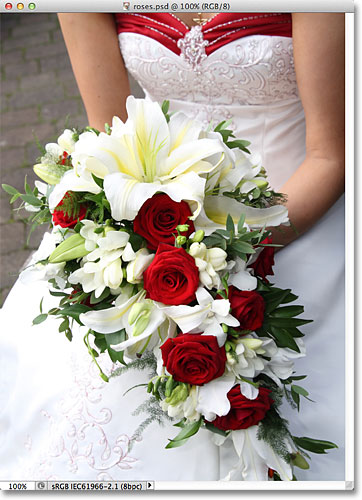
The roses need to be selected.
With the Color Range dialog box open and my principal Eyedropper Tool agile, I'll click one time inside one of the roses to make my initial colour selection:
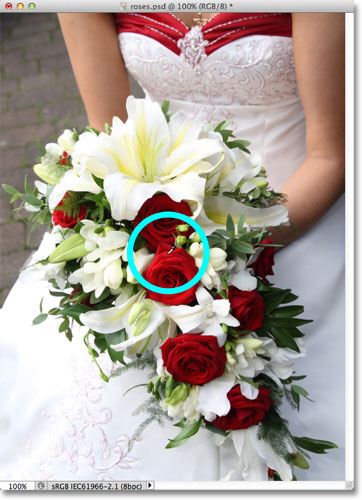
Clicking in one case to select an initial shade of red.
We tin can see my initial selection in the preview window:
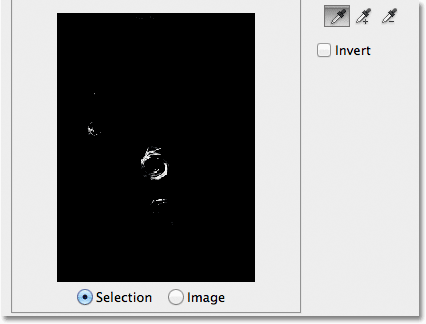
The initial selection appears in the preview window.
To add more areas to my selection, I'll press and hold my Shift key, which temporary switches me to the Add to Sample Tool, and I'll click on more shades of crimson in the roses. I can also elevate beyond an area, just as we saw with the slope, to add multiple shades of red to my choice at once:
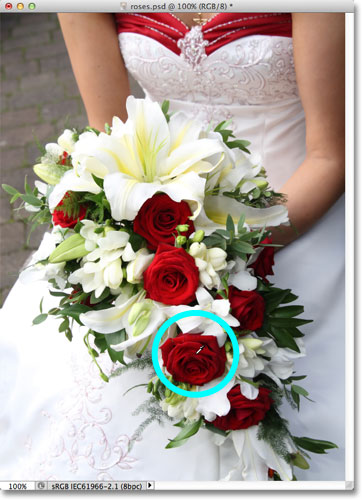
Holding Shift and clicking to select more shades of red.
The preview window shows the areas that have been added to the selection:
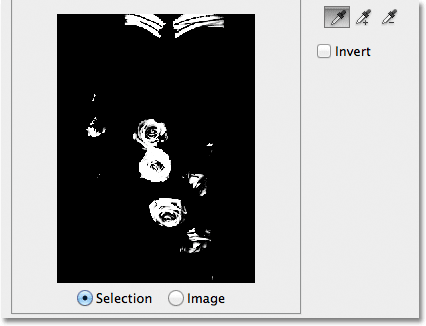
The newly added sections appear in the preview.
The Preview Options
1 selection we have with the preview window that nosotros haven't looked at notwithstanding is the ability to view the actual image itself within the preview window, rather than seeing a grayscale preview of the selection. If you lot look directly below the preview window, you'll see ii options - Selection and Image. To switch to the epitome view, select the Paradigm option. You tin can even click on the image within the preview window, rather than in the the document window, to brand and edit your selections. You may not observe this pick especially useful, only it's there if y'all need it. To switch back to viewing the grayscale preview, choose the Choice selection (which is selected by default):
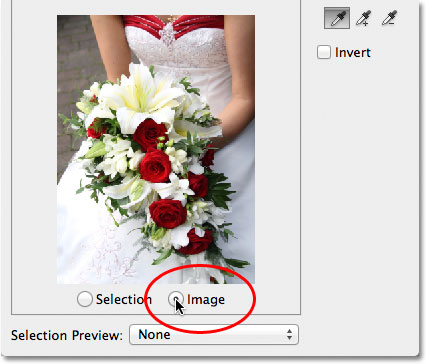
Choose "Image" to view your image in the preview window. Choose "Choice" to view the grayscale preview.
A much more useful preview option is institute at the very bottom of the Colour Range dialog box. The Option Preview option controls what we see in our document window. By default, it's gear up to None, which ways we're seeing our actual image in the document window:
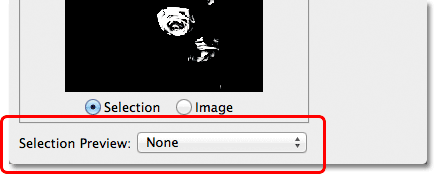
The Selection Preview option.
If you click on the word None, you'll open up a list of additional choices - Grayscale, Black Matte, White Matte, and Quick Mask - each of which gives us a different way to preview our electric current selection inside the document window. I'll choose the start one, Grayscale:
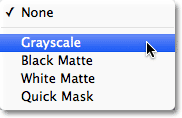
Choosing Grayscale from the Option Preview option.
And now if nosotros wait in my certificate window, rather than seeing the image, nosotros're seeing a full size grayscale preview of my current pick. It's the same preview that was displayed in the preview window, but it's much more useful when viewed at total size:
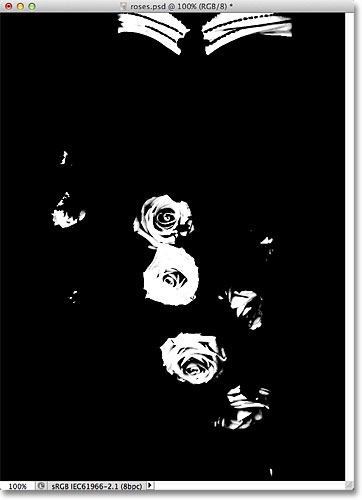
A full size version of the grayscale choice preview now appears in the document window.
Another very helpful fashion to preview your selection is by choosing Blackness Matte from the Selection Preview option:
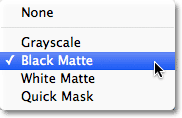
Choosing Black Matte from the Option Preview option.
This is my favorite manner to preview my choice because information technology displays the actual prototype itself, or at to the lowest degree, the areas of the image that are currently within my selection, against a solid blackness background:
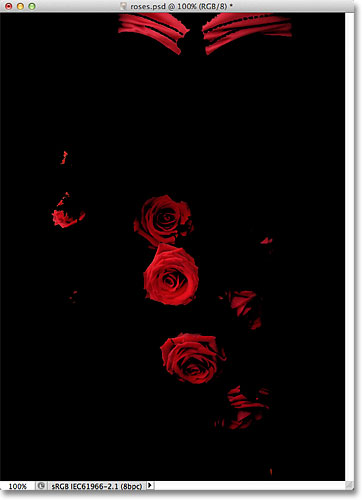
The selected areas of the image are at present displayed confronting a black groundwork in the document window.
You can also choose White Matte, which will display the selected area(southward) of the prototype against a solid white groundwork, or Quick Mask to view the selection with the Quick Mask ruby-red overlay. All 4 options can be useful ways to preview your pick in the document window. To switch back to viewing the image, ready the Pick Preview choice back to None.
Localized Color Clusters (Photoshop CS4 and Higher)
Notice, though, that I'm running into a bit of a trouble. I desire to select merely the red roses in the photo and then I can keep them in color while converting the residual of the paradigm to black and white, merely if you lot look at the very top of the certificate in the previous screenshot, you lot'll encounter that I've as well selected the top office of the woman'southward wearing apparel considering it's the same red color every bit the roses.
In Photoshop CS4, Adobe added a new feature to the Color Range command called Localized Color Clusters. We can utilise this option to limit the areas in the photo where Photoshop will look for matching colors. I'll click inside the checkbox to enable the choice (once more, the Localized Color Clusters option is only available in CS4 and higher):
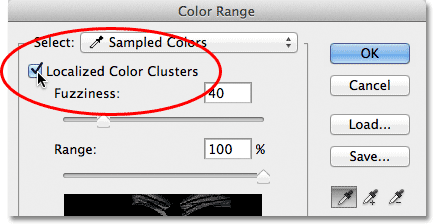
Turning on Localized Color Clusters.
As soon every bit we plough on Localized Color Clusters, another option, Range, becomes available direct below the Fuzziness slider. With Range set to 100% (or with the Localized Color Clusters pick turned off), Photoshop will look throughout the entire epitome for areas of matching color to add to our selection. But as we lower the Range value by dragging the slider towards the left, we tell Photoshop to look just at areas of the photo that are closer to the areas we clicked on, and to ignore areas that are too far abroad from where nosotros clicked.
In other words, I can tell Photoshop to ignore the reddish function of the woman'due south dress at the top of the photo, and to focus just on areas closer to the roses (the areas I clicked on to sample colors) just past lowering my Range value. I'll lower my Range value downwardly to around fifty% or so. And now. if nosotros await at the acme of the preview window, we run into that it has become solid blackness, which ways the woman'southward wearing apparel is no longer function of the choice because information technology'southward too far away from the roses:
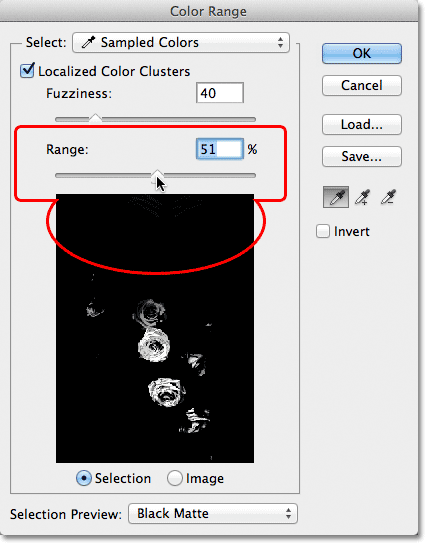
Lowering the Range value removed the height area of the photograph from the selection.
I'll continue clicking inside the roses with my Add together to Sample Tool to add more areas to my selection. So I'll fine-tune my selection with my Fuzziness slider. With the gradient example nosotros looked at previously, we saw how to add to the selection by increasing the Fuzziness value, but with this image, I'm really going to tighten up the selection a bit by lowering my Fuzziness value slightly. Finally, I'll re-adjust my Range value to tighten the option even further, and afterwards playing around with the settings for a few minutes (y'all'll often need to go back and forth with the settings to become things merely right), I'm happy with my final result:
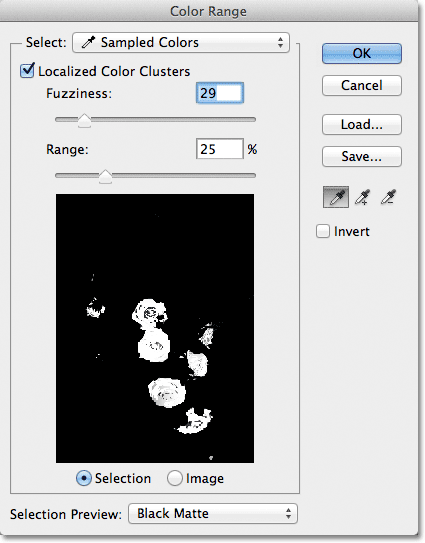
My terminal Color Range settings.
Inverting The Choice
One last important thing I demand to consider is that I currently have the roses selected, just what I actually demand is for everything except the roses to be selected. In other words, I need to invert my selection so that everything that'southward currently selected (the roses) becomes deselected, and everything that's currently not selected (the residuum of the photo) becomes selected.
To invert the option from within the Colour Range dialog box, all we need to do is select the Capsize selection below the eyedroppers. This will also invert the grayscale selection preview in the preview window, since my roses (now filled with black) are no longer function of my selection, while the rest of the paradigm (filled with white) is now selected:
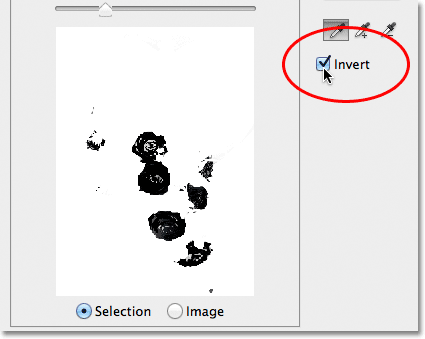
Selecting the Invert choice.
To complete my selection, I'll click OK in the top right corner of the dialog box to close out of the Color Range control, and we now see the standard "marching ants" option outlines in my certificate. As I mentioned earlier, the selection outline simply appears around pixels that are at least l% selected, which means what we're seeing is often not entirely accurate:
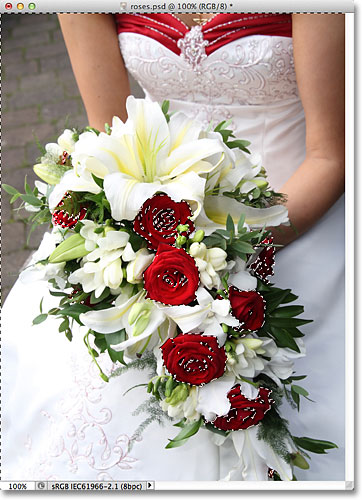
The standard selection outline appears in the document.
To apace cease up my upshot, I'll click on the New Adjustment Layer icon at the bottom of the Layers panel:

Clicking on the New Adjustment Layer icon.
Then I'll choose a Blackness & White aligning layer from the listing that appears:
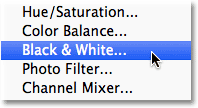
Choosing a Black & White adjustment layer.
This adds a Black & White aligning layer above my image on the Background layer. We can see in the layer mask preview thumbnail that Photoshop practical the selection I created with the Colour Range command to the adjustment layer'southward mask:
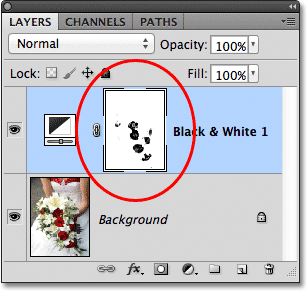
The newly added Black & White adjustment layer.
I'll leave the Black & White adjustment layer set to its default settings for now, just so we can encounter that thanks to the Color Range control's power to select the roses based on their color, I was able to easily isolate them from the rest of the epitome so they tin remain in colour while everything else is converted to black and white:
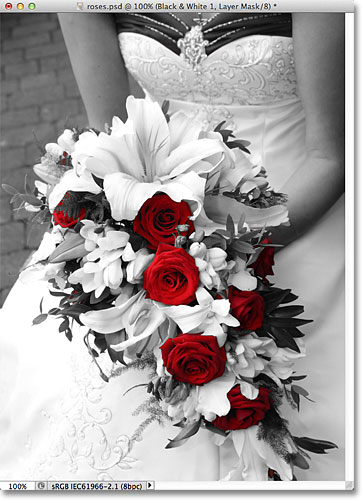
The concluding issue.
Where to go next...
And in that location we have information technology! That's how to select areas of similar color in an paradigm using Photoshop's Colour Range command! It can take some practice at first, but once you're more than comfortable with it, you lot'll find that when it comes to making color-based selections in Photoshop, even though the Magic Wand is easier to use, the Color Range command volition give you amend results every time.
For more almost Photoshop's selection tools, see our How to brand selections in Photoshop serial. Visit our Photoshop Nuts section to learn lots more about the basics of Photoshop!
Other Stuff
© 2022 Photoshop Essentials.com.
For inspiration, non duplication.
Site design by Steve Patterson.
Photoshop is a trademark of Adobe Systems Inc.
Source: https://www.photoshopessentials.com/basics/selections/color-range/
0 Response to "what values for colors in a rgb command range what to what"
Publicar un comentario